COOKING AT THE END OF THE WORLD :: MICHÈLE GENTILLE
In a freely available article, The Wall Street Journal reveals how chefs cook at the Amundsen-Scott South Pole Station. Cooking at the South Pole needs lots of innovation and creativity. Let's look at some of the challenges. First, the South Pole Station stands at an elevation of 2,835 meters and temperatures varied between -13.6° C and -82.8° C. Then, all the food for the 250 scientists based there comes by plane and is obviously frozen. And it can take up to two weeks to defrost meat or poultry. Finally, because of the moisture-free air, cooking must be exclusively done with electric equipment, which can take a very long time. But read more...
FOOD FOR DESIGN MOLECULAR DESSERTS AT DESIGNERS' LOUNGE
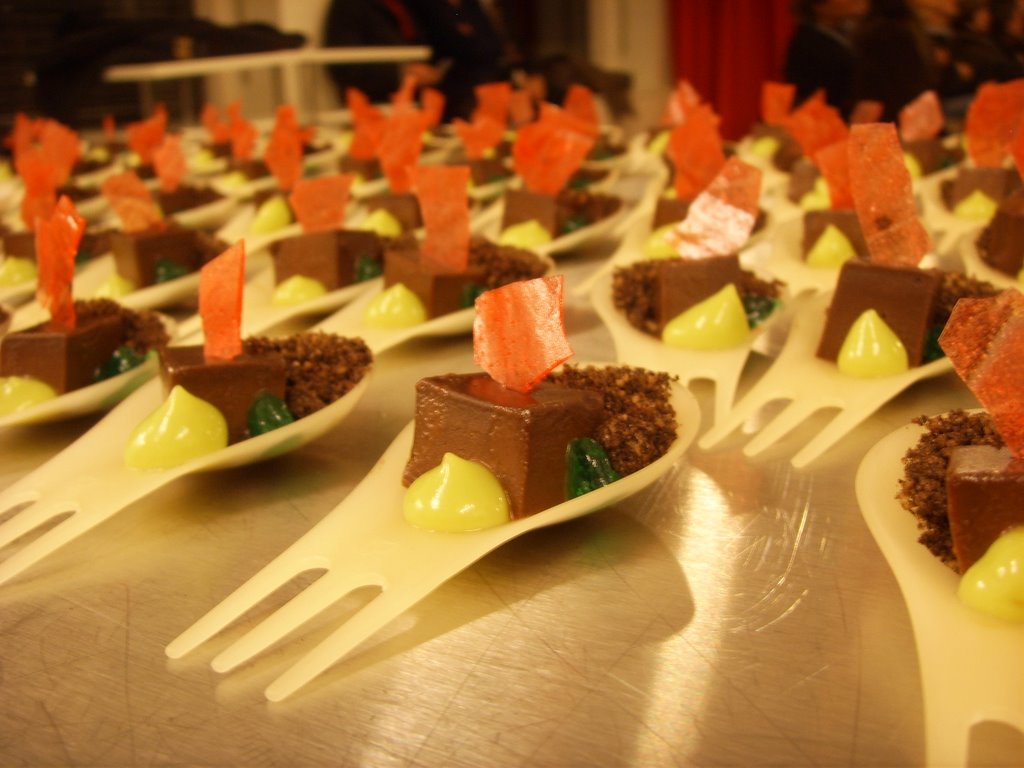
Designers' lounge in Kortrijk with designer of the year Alain Berteau. Food for design provide some molecular gastronomy desserts like a sugar bonbon filled with walnut oil and chocolate soil or soft chocolate, avocado, mint inspired by the pastry chef from WD~50 Alex Stupak.
HAROLD MCGEE HAS NOW AN OCCASIONAL COLUMN IN THE NY TIMES
Harold Mc Gee has an occasional column in the New York Times Wednesday food section. His first column talks about the strange, blue-green colors that can develop when garlic and onions are handled in certain ways. The information in the column comes from several recent papers on the subject from labs in Japan and China.
Not only the food, ambiance are premium at WD-50. Even the cocktails underline the richness of the restaurant. Jose Miranda of WD-50 in New York makes a Malta Fizz, with an egg yolk. The strangest ingredients sometimes make the best drinks. Real bartenders occasionally invent cocktails that their customers would rather not try. The trouble may be personal, an aversion rooted in an unhappy memory. But we tasted it and indeed it was superb.
'T AARDS PARADIJS AT THE INNOVATION DAYS OF MICROSOFT
Lieven Lootens, chef at "'t aards paradijs" in Nevele, was invited at the Innovation day of Microsoft in Brussels. The event was basically a show case of various high tech projects aimed at EU representatives and journalists basically. But also the chef did a high tech show case with Texturas products and liquid nitrogen.
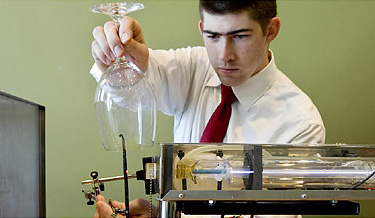
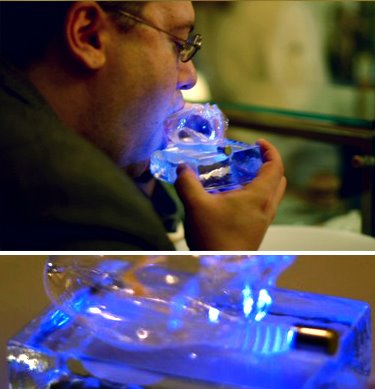
Homaru Cantu uses at his restaurant Moto in Chicago a Class 4 laser, typically used for military experiments and eye surgery, and a vanilla bean to "caramelaserize" a wineglass — that is, to coat it with the flavor of vanilla — before filling it with red wine and pairing the altered wine with a beef course on his restaurant's tasting menu
Heston Blumenthal (born May 27, 1966 at High Wycombe, near London) is the chef and owner of The Fat Duck, a three-Michelin-starred restaurant in the village of Bray in Berkshire.
His fame is based upon his scientific approach to cooking which is often referred to as "molecular gastronomy" or "culinary alchemy". The phrase "molecular gastronomy" was coined by the late Professor Nicholas Kurti at University of Oxford and later promoted by the French scientist Hervé This. Kurti's original idea was that it is worthwhile for science to investigate the chemical processes that occur in food during cooking as well as the inherent physical properties of foodstuffs. Blumenthal has seen this idea as a way of making tastier food. While some are sceptical about the application of science to cooking, Blumenthal has remained a steadfast proponent, going so far as to open his own research and development kitchen in early 2004.
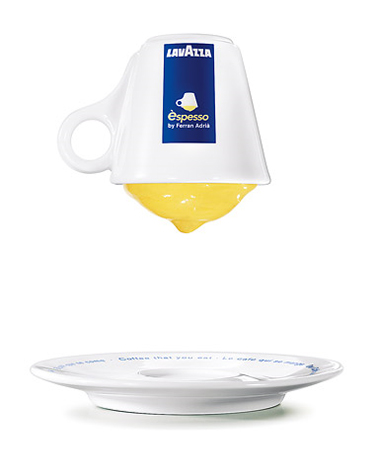
Spanish culinary mastermind Ferran Adrià is famous for tinkering with food at the molecular level to produce wonders like liquid ravioli and frozen Parmesan air. His latest gastronovelty: solid espresso, dubbed èspesso. It's made by combining regular espresso with sugar and a secret ingredient, then squirting it out of a canister like whipped cream. You eat it with a spoon. The mousselike treat arrived in the U.S. in September, and is available in espresso, cappuccino and macchiato flavors.
Had again a very nice diner at 'in de wulf'. The chef (Kobe Desramault) is the youngest Michelin star chef in Belgium. Each time we go over for dining we're always supprised. The chef will also do demonstrations at the 1° seminar MG in Belgium. Sadly for the ones who still want to join the seminars; it is full booked. But there will follow other opportunities.
Wagashi (Japanese: 和菓子) is a general term applied to different types of Japanese snacks, especially sweet ones made of sticky rice, fruits, etc. served in Japanese tea ceremonies. Wagashi is a type of snack made from all natural, plant based ingredients that influences all five senses. They are commonly named from natural beauties and a word from ancient literatures. Typical ingredients include glutinous rice, chestnuts, sweet potato paste and sesame seeds. Sophisticated sweets made from beans and agar-agar are often in the shape of seasonal objects. Inspiration for some new MG recipes?
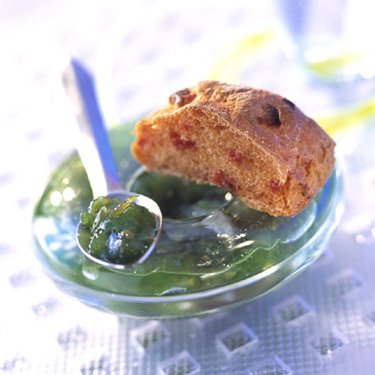
[+ image 01] Space recipe 'Spirulina Gnocchis' [+ image 02] Space recipe 'Martian bread and green tomato jam'
'Martian bread and green tomato jam', 'Spirulina gnocchis' and 'Potato and tomato mille-feuilles' are three delicious recipes that two French companies have created for ESA and future space explorers to Mars and other planets.
The challenge for the chefs was to offer astronauts well-flavoured food, made with only a few ingredients that could be grown on Mars. The result was 11 tasty recipes that could be used on future ESA long-duration space missions. ADF – Alain Ducasse Formation and GEM are the two French companies that produced the recipes, and their mutual experience in creating new products and ‘haute cuisine’ have led to excellent results.
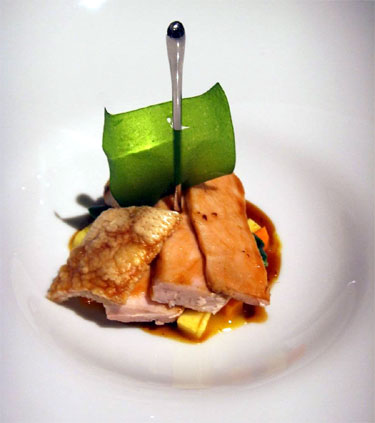
Dining at "Hertog Jan" (belgian MG restaurant) 30 august 2006. Overview of some dishes. The chef knows what he is doing as he combines the best ingredients with some insights in MG and very nice dressings of the plate
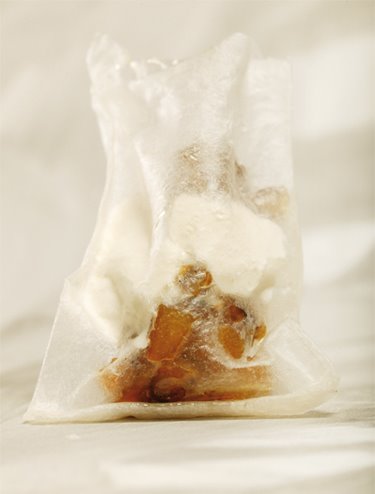
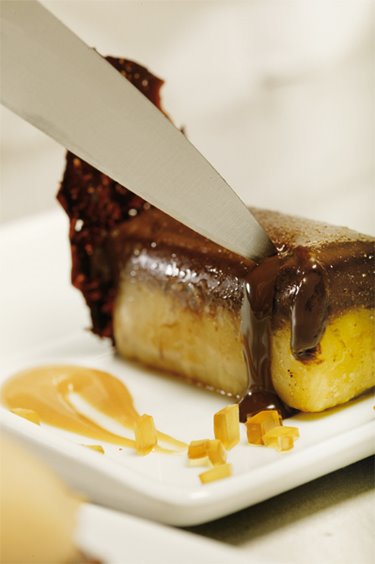
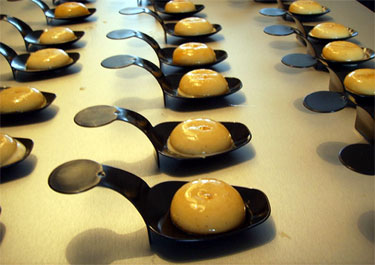
4 different desserts were made last sunday. 2 new recipes: 'Pearl of Crême brulée' and 'Panna cotta with gelle of sweet white wine'. 2 recipes inspired by Sam Mason the pastry chef of WD-50: 'Carrot-Lime ravioli, coconut tapioca, cumin' and 'Raisin puree, ice-cream of brown ice, raisin paper'
Recipes are posted on Flickr. The 2 new desserts are made with ingredients of Sosa (for Belgium contact Cnudde nv); gellan and gelatine vegetale. Especially the gelatine vegetale is very nice, it gives the possibilities like alginates without the use of CaCl2. You only have the freeze the filling. The membrane is solidified by putting the ice in the hot liquid.
[+ more] website of Sam Mason with some recipes and very nice pictures of his desserts
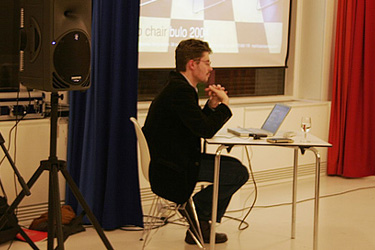
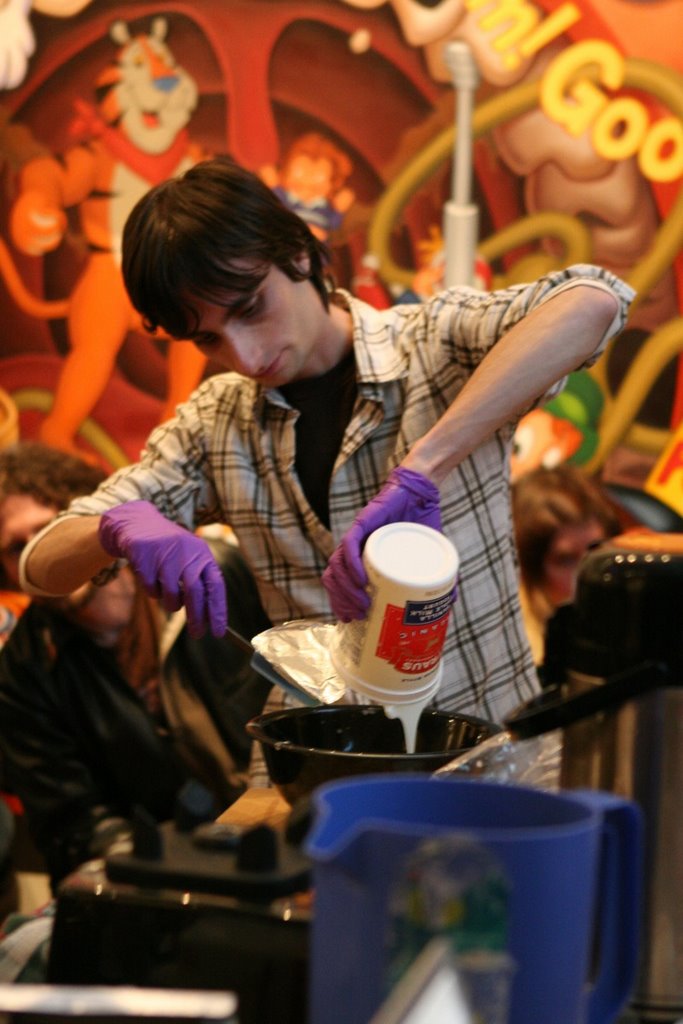
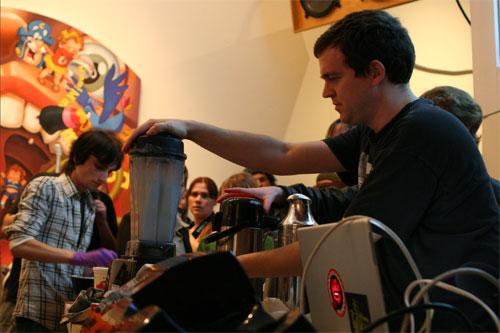
Here are the photos from last night’s amazing dorkbot-24 at RX Gallery which featured Marc Powell, who did a food hacking demo involving gratuitous molecular gastronomy and Jennifer Granick, who gave a presentation on security and the law, using examples from Star Wars to illustrate her points.Most interesting that is...
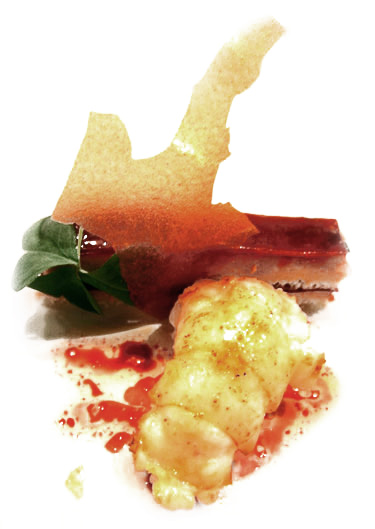
Dining at 'L'air du temps" (belgian MG restaurant) 4 august 2006. Very impressive. Overview of some dishes including a fabulous decomposed sushi with lobster and a mouth melting low temperature pigeon with quinoa, tonga beans.
Chef Sang Hoon will also do some demonstrations on the first seminar on MG in Belgium (20 november 2006). Be there!
Dessert by Roger Vandamme of 'Het Gebaar' in Antwerp. Roger Vandamme is seen as one of the most innovative patissiers in Belgium. One of his inspirations is Alberto Adria, which he has a good contact with (so also MG desserts on the menu) and Gunther Van Essche of 'Del Rey'.
Food for design wants to be an open source for design, food and science cross-over. We are not interested in creating hypes, but in long term co-operations, where everyone benefits. Promoting quality and collective creativity are the things that count... So please take a seat and have a bite! Best view [res: 1024 x 768] x [browser: firefox]
_ random newsletter
_news
_m[eat]ing 003
17.03.2007::MATERIALS ::
Food for design was invited by the Meat & Fresh expo and will install a creative food laboratory at the rambla during the fair,
where people can find inspiration towards form and taste.
[+ more]
_m[eat]ing 002
18.11.2006::MATERIALS ::
A feast of surfaces, textures, colors and other sensorial elements, using a large palette of food materials.
The objective is to inspire new uses for food materials and provoke new applications within a design context.
[+ more]
_seminar
20.09.2006::MG SEMINAR IN BELGIUM ::
This seminar [ 20 november 2006 ] is organised by the innovation and knowledge centre of food for every one who is interested in food science, technology and cooking processes. This can be chefs, scientists, recipe developers, foodies,...
The guest speakers tell and demonstrate how food science and technology can inspire gastronomy...
[+ english][+ dutch]
_manifesto 001
03.02.2006::FOOD for design::
The first aim of this project is to explore and understand the physicochemical properties of materials / ingredients and apply this under-standing when designing.
_manifesto 002
28.01.2006::food for DESIGN::
A different way of thinking : abandoning the role of "creator" and "descending" to the role of a participant playing within the rules of an experimental process.
All experiments come into being as a result of self-formation processes.
_manifesto 001
22.01.2006::food FOR design::
In exploring the materials the main focus lays on the food as in exploring the structure the primary focus lays on the process.
The goal of this cross-fertilisation project is to add more senses / experience to design, it is a way of sustainable, random, natural thinking to in-spire others, giving food for the future.